

Views: 0 Author: Site Editor Publish Time: 2026-07-16 Origin: Site


Undetected print defects, telescoping rolls, and material waste carry a massive financial impact in high-volume web converting, flexible packaging, and label production. When faulty rolls reach your clients, the resulting rejections damage both your profitability and your reputation. The core challenge lies in matching complex machine specifications—such as tension control, web width, and inspection accuracy—to the specific behaviors of your materials. Processing rigid paper requires a completely different approach than handling ultra-thin foils, flexible packaging, or extensible labels.
You need a structured, technical evaluation framework to select the right equipment. Choosing a highly capable Inspecting Rewinding Machine minimizes production downtime and ensures strict compliance with demanding quality standards. By understanding how mechanical design, automation, and vision systems interact with your specific substrates, you can secure equipment that delivers a measurable, long-term return on investment.
Material Dictates Machine Design: Narrow web label inspection requires vastly different tension, guiding, and slitting configurations compared to wide web post-printing or laminated film applications.
Automation Drives Throughput: Upgrading to an automatic rewinding machine drastically reduces manual handling, operator splicing errors, and cycle times.
Inspection Tech Varies by Need: Choosing between basic strobe inspection, cost-effective manual systems, and 100% automated camera defect detection depends entirely on client quality mandates and defect tolerance.
Safety and Durability Outweigh Speed Specs: Heavy-duty frame construction, advanced speed control, and integrated safety guard systems protect operators and guarantee machine longevity.
Long-Term Value Exceeds Capital Expense: Long-term value relies on evaluating vendor support, parts availability, and the machine's ability to reduce post-print waste.
Your material characteristics dictate every mechanical requirement of the machine. Narrow web applications typically involve self-adhesive labels, tags, and small security films. These require highly precise guiding over shorter spans. Wide web applications handle post-printing films, lamination, and heavy-duty flexible packaging. They demand robust rollers and wider web paths to maintain stability. When you run a 1500mm wide roll of PET film, the deflection on the idler rollers becomes a major factor. You must ensure the roller diameter and wall thickness can handle the web tension without bowing.
Material thickness, measured in microns or mils, directly influences roller types and web path design. High elasticity films require specialized tension zones to prevent stretching. Surface friction determines whether you need specialized coated rollers to avoid scratching delicate substrates. Machine frame rigidity must scale with the width and weight of the master rolls you intend to process. If you run 40-micron LDPE, the tension requirements are drastically lower than running 200-gram paperboard. The machine must have the mechanical range to handle your specific gauge variations.
You must establish a baseline for acceptable print quality based on your end-user requirements. Pharmaceutical labels often demand zero-defect tolerances, necessitating highly advanced vision systems. Standard retail or corrugated packaging may allow for minor visual imperfections, allowing for simpler inspection methods. You need to map out exactly what constitutes a failure for your specific client base. A missing dot on a flexo print might pass for a discount retailer but will trigger a massive rejection from a high-end cosmetics brand.
Identify the specific defects your production line struggles with most. Common targets include missing print, color registration errors, and matrix stripping failures. You must also account for physical web defects like pinholes and scratches. If you print barcodes or QR codes, verifying their readability at high speeds is a strict requirement. Operators cannot catch a misprinted barcode at 300 meters per minute. You need automated grading systems integrated directly into the web path.
The packaging industry is shifting rapidly toward sustainable materials. Biodegradable bioplastics, recyclable mono-materials, and ultra-thin flexible packaging present unique handling challenges. These modern substrates often exhibit varying tensile strengths and can be highly sensitive to tension fluctuations. A mono-material PE pouch structure stretches much easier than a traditional PET/PE laminate. Your equipment must adapt to these changing physical properties.
Evaluate the machine's capability to process these fragile substrates without stretching, tearing, or wrinkling. An advanced Inspecting Rewinding Machine must offer highly adjustable tension profiles. Preparing for these trends ensures your equipment remains viable as client demands evolve toward greener packaging solutions. You will likely see thinner gauges in the coming years to reduce plastic usage. Your web handling systems must be sensitive enough to run 12-micron films without inducing stress lines.
Manual inspection relies heavily on the operator. It offers lower speeds and carries a higher risk of fatigue-related errors. However, it remains highly cost-effective for smaller runs or simple visual checks. Entry-level hybrid setups combine cost-effective manual web inspection tables with motorized, basic rewinding mechanisms to improve ergonomics. Operators manually jog the web to the defect, cut it out, and tape the splice. This works for short runs but fails miserably when trying to push high volumes.
Fully automated solutions provide massive efficiency gains. An automatic rewinding machine features automated tension profiling and auto-splicing tables. Turret rewinding allows for continuous operation without stopping for roll changes. Programmable deceleration automatically slows the web when a defect is detected, placing the flaw exactly on the splicing table for removal. This eliminates the operator hunting for the defect and drastically cuts down on wasted time.
System Type | Speed & Efficiency | Operator Dependency | Best Application |
|---|---|---|---|
Manual | Low to Medium | High | Short runs, basic visual checks |
Hybrid | Medium | Moderate | Mid-sized runs, budget-conscious upgrades |
Automatic | High | Low | High-volume, zero-defect tolerance runs |
Precise speed control must be maintained across variable roll diameters from the unwind to the rewind station. As the rewind roll grows, the motor must adjust its speed and torque to maintain constant web tension. Basic AC vector frequency drives offer standard control suitable for robust materials. They work fine for heavy paper or thick laminates where slight tension variations do not cause immediate web breaks.
High-performance multi-servo drive systems synchronize web movement seamlessly. Servo motors provide instantaneous feedback and micro-adjustments. This prevents tension spikes during rapid acceleration or deceleration, which is vital when inspecting highly extensible films or delicate foils. When the camera detects a flaw at 400 meters per minute, the servos must brake the unwind and rewind shafts in perfect unison. If they fall out of sync by even a fraction of a second, the web snaps.
Visual inspection technology operates in distinct tiers. Standard strobe lights freeze the web visually, allowing operators to spot gross defects. Basic line-scan cameras offer automated detection of high-contrast flaws. The highest tier involves 100% automated print inspection systems that compare every printed repeat against a master digital file. These systems catch color shifts, missing text, and registration errors that the human eye simply cannot see at production speeds.
Integration capabilities define the system's true value. Determine if the machine can interface with existing prepress data for PDF-to-print verification. The system should generate comprehensive roll-mapping and quality reports, providing a digital audit trail for your clients. When a client claims a roll was defective, you can pull the roll map data and prove exactly what was shipped. This data integration protects your business from fraudulent claims.
Closed-loop tension control systems are an absolute necessity. They utilize load cells and dancer rollers to continuously measure and adjust web tension. This active feedback loop prevents web stretching, telescoping, or wrinkling during high-speed runs. Load cells measure the exact force applied to the web and send a signal back to the PLC. The PLC then adjusts the pneumatic brake on the unwind or the motor torque on the rewind to keep the tension perfectly flat.
Taper tension capabilities are critical for building stable, high-quality finished rolls. Taper tension gradually decreases the winding tension as the roll diameter increases. This prevents the inner layers from being crushed or starring, which is particularly important for highly extensible films and flexible packaging. If you wind a large roll with constant tension, the outer layers will squeeze the inner layers so hard that the core can collapse. Taper tension solves this physical problem.
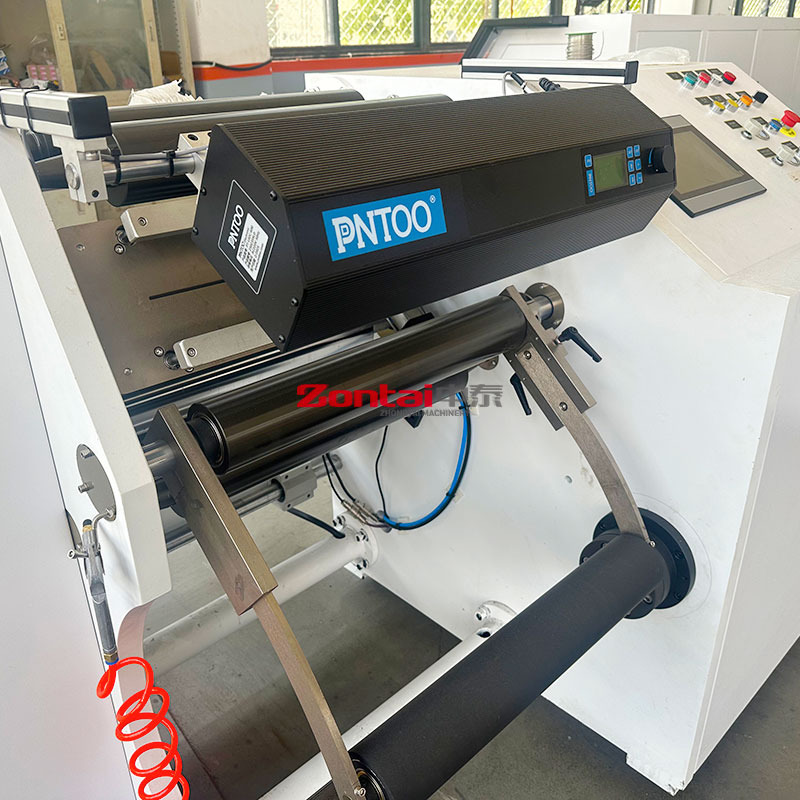
You must examine the realistic operational speeds of the machine. Running 100% automated inspection often requires slower web speeds compared to standard high-speed rewinding without inspection. The camera's processing power and lighting intensity dictate the maximum inspection speed. If you upgrade to a 4K line scan camera, you need massive processing power to handle the image data at 300 meters per minute. Do not assume the mechanical top speed matches the inspection top speed.
Evaluate the braking system's responsiveness. When the camera detects a flaw, the machine must decelerate from high speeds rapidly. It must position the defect precisely on the splicing table without causing web breakage or tension spikes. Poor braking leads to wasted material and operator frustration. If the machine overshoots the defect, the operator has to reverse the web, which often causes tracking issues and wrinkles.
Structural integrity directly impacts long-term performance. Heavy-duty, vibration-dampening solid steel or cast-iron side plates offer significant benefits over lightweight aluminum frames. Vibration causes camera blurring and uneven winding, so a massive, rigid frame is essential for high-speed accuracy. When you walk up to the machine running at full speed, you should not feel the frame shaking. If it vibrates, your finished rolls will have uneven edges.
Evaluate critical safety features meticulously. Safety light curtains and interlocking physical guards protect operators from nip points. Emergency stop button responsiveness must be instantaneous. Ensure the equipment carries proper CE or UL compliance certifications for your region. Operators will bypass safety guards if they are poorly designed and hinder production. You need safety systems that integrate smoothly into the daily workflow without causing bottlenecks.
Assess the integration of slitting modules within the inspection process. Depending on your material, you may need shear, razor, or crush cut slitting knives. Having slitting capabilities integrated into the inspection pass saves a secondary production step. Shear slitting works best for paper and heavy laminates, while razor slitting is ideal for thin films. Ensure the knife holders are easy to adjust and lock securely into place.
Evaluate Edge Position Control (EPC) and Line Position Control (LPC) systems. These guiding systems maintain precise web alignment as the material enters the inspection zone and the rewind shaft. Accurate guiding reduces edge trim waste and ensures perfectly flush finished rolls. Ultrasonic sensors work well for clear films, while optical sensors are better for opaque printed webs. The guiding actuator must respond quickly without oscillating.
Review the physical design of the splicing table. Features like magnetic or pneumatic clamps hold the web securely during defect removal. Adjustable inspection backlighting helps operators identify pinholes or clear-on-clear registration issues quickly. A well-designed splicing table includes a built-in cutting groove to ensure perfectly straight splices. Crooked splices cause tension wrinkles that propagate through the rest of the finished roll.
Evaluate roll loading and unloading mechanisms. Shaftless unwind stands and pneumatic expanding shafts make handling heavy rolls much easier. Integrated hydraulic roll lifts mitigate workplace injuries and drastically reduce changeover times between master rolls. Expecting an operator to manually lift a 100kg shaft into a chuck is a massive safety liability. Hydraulic lifts pay for themselves by preventing back injuries and keeping the machine running.
Calculate your return on investment based on salvaged material and a reduction in customer rejections. When you catch defects before they ship, you save the cost of reprinting and shipping replacement orders. Increased throughput also contributes heavily to a positive ROI. You need to track exactly how much material goes into the recycling bin because of poor tension control on your older machines. That waste number justifies the new equipment purchase.
Weigh the upfront cost of high-end vision systems and automated splicing tables against long-term savings. Quality assurance labor is expensive and prone to human error. Automating this process reduces headcount requirements and guarantees a consistent, objective quality standard. A camera system does not get tired at the end of a 12-hour shift. It applies the exact same pass/fail criteria to the first roll of the day and the last.
Analyze the importance of non-proprietary, off-the-shelf electronic components. Machines built with PLCs, sensors, and drives from major global brands allow for easier localized maintenance. You will not be held hostage waiting for custom parts to ship from overseas. If a servo drive fails on a Tuesday night, you need to be able to buy a replacement from a local industrial supplier on Wednesday morning.
Evaluate vendor Service Level Agreements carefully. Remote diagnostic capabilities via IoT connections allow technicians to troubleshoot software issues instantly. Domestic parts availability is crucial for minimizing downtime when mechanical components eventually wear out. Ask the vendor for a recommended spare parts list and buy the critical wear items with the machine. Having a spare set of brake pads and load cells on the shelf prevents week-long shutdowns.
Address physical space requirements before delivery. You need adequate operator safety clearance zones and clear walkways. Material staging areas for incoming master rolls and finished pallets require significant floor space around the machine. Do not just measure the machine dimensions. You need to account for the swing radius of the roll lifts and the space required to pull the rewind shafts out of the finished rolls.
Detail all utility requirements early. Verify power voltage and phase requirements match your facility. Pneumatic air supply must meet specific PSI and filtration quality standards to operate pneumatic shafts and brakes reliably. Cleanroom compatibility or static elimination bars may also be necessary depending on your environment. Static buildup on plastic films attracts dust and can actually shock operators. Active static control bars are mandatory for film applications.
Assess the learning curve associated with new equipment. Modern Human-Machine Interface software, recipe management databases, and vision system programming require dedicated training. Operators used to manual machines will need time to adapt to automated workflows. The HMI should be intuitive, with clear visual icons rather than dense text menus. If the operator cannot figure out how to load a new job recipe in under two minutes, the software is too complex.
Outline strategies for phased implementation. Do not schedule critical, tight-deadline jobs on the new machine during its first week. Run test rolls and allow operators to build confidence to avoid disrupting current production schedules. Have your best operators write standard operating procedures during the commissioning phase. They will find the most efficient ways to thread the web and perform splices.
Evaluate how the new machine fits into your current workflow. Determine if it will handle rolls directly from the primary press, a laminator, or a primary slitter. The web width and core sizes must match your upstream equipment seamlessly. If your press winds on 6-inch cores but your rewinder only has 3-inch shafts, you have a major bottleneck. Standardize your core sizes across the plant.
Discuss data integration capabilities. Exporting defect logs and production metrics to plant-wide ERP, MES, or MIS systems provides digital workflow traceability. This data helps identify which upstream processes are causing the most defects. If the rewinder consistently finds registration errors on the left side of the web, you know exactly which print station needs maintenance. Data turns the rewinder into a diagnostic tool for the entire plant.
The right equipment balances material-specific tension control with the exact level of defect detection required by your target market. Over-specifying wastes capital, while under-specifying risks client rejections. Focus on mechanical rigidity, precise drive control, and reliable vendor support to ensure long-term success.
To move forward effectively, take the following steps:
Audit your current material waste and client rejection logs to determine your exact defect detection requirements.
Narrow your vendor list to those with proven, documented experience handling your specific web widths and substrate types.
Request a live or virtual demonstration using your actual printed material rolls to verify tension handling and detection accuracy.
Verify the availability of local service technicians and off-the-shelf replacement parts before finalizing any purchase agreement.
A: A standard slitter rewinder focuses primarily on cutting wide master rolls into narrower rolls at high speeds. An inspecting rewinding machine is specifically designed to pause or slow down to identify, remove, and splice out print defects before final winding.
A: It utilizes advanced servo motors and automated tension controls to run at higher base speeds. Furthermore, automated defect positioning and auto-splicing tables drastically reduce the time operators spend manually finding flaws and taping webs.
A: These machines can process a vast array of materials, including paper, self-adhesive labels, ultra-thin flexible packaging films, aluminum foils, and laminated structures. The machine's tension control system must be tailored to the specific material.
A: It uses sensors to continuously monitor web tension and instantly adjusts motor torque or braking force. This prevents the material from stretching, wrinkling, or breaking, ensuring a perfectly wound finished roll.
A: Yes, advanced 100% inspection vision systems use high-resolution cameras to compare the live web against a master PDF. They can easily detect color shifts, registration errors, missing text, and physical defects like insect inclusions or pinholes.
A: Most industrial rewinders require a three-phase electrical connection and a clean, dry compressed air supply to operate pneumatic shafts, brakes, and splicing clamps. Specific voltage and PSI requirements vary by manufacturer.
