

Views: 0 Author: Site Editor Publish Time: 2026-04-30 Origin: Site


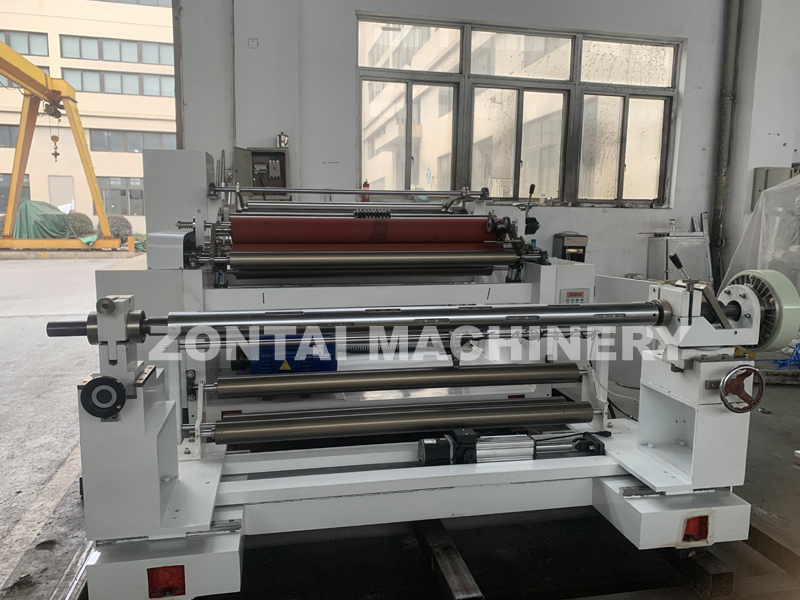
Transitioning from buying finished tape to converting it in-house marks a critical scalability milestone. It empowers packaging and logistics suppliers to control their entire supply chain. However, bridging the gap between raw jumbo BOPP (Biaxially Oriented Polypropylene) rolls and market-ready adhesive tape remains notoriously difficult. Production managers frequently struggle against high material waste and inconsistent tape tension. These common manufacturing flaws quickly eat into profit margins and frustrate end-users.
This guide serves as a comprehensive technical evaluation framework. We will help you understand specific machine capabilities so you can choose the right automation tier for your factory floor. You will learn how to evaluate vendor ROI based on your actual operational realities, securing a smoother, more profitable production line. Whether you manage a team on the factory floor or invest in industrial assets, mastering this converting process ensures long-term business success.
BOPP tape slitting rewinding machines transform master jumbo rolls into custom-width consumer or industrial tape rolls in a single continuous process.
Advanced configurations mitigate the three most costly production flaws: adhesive buildup, edge fraying, and tension-induced wrinkles.
Buyers must choose between manual, semi-automatic, and fully automatic models based on labor availability and target output (ranging from 0–40M/min to high-speed industrial specs).
A complete turnkey solution requires auxiliary equipment, including core cutters, loaders, and a mini BOPP tape slitting rewinding machine for waste recovery.
Before purchasing equipment, production managers must define the exact scope of the machine. Buyers need to know exactly what they are paying for. A high-quality bopp tape slitting rewinding machine serves a very specific purpose. It takes massive, wide master rolls and slices them down into the narrow, functional tape rolls consumers and businesses use daily.
The conversion process relies on continuous motion. The equipment executes four distinct stages simultaneously to ensure high-speed production.
Unwinding: The process begins by safely mounting and feeding the heavy master roll. Jumbo rolls often weigh hundreds of kilograms. Robust unwind stands hold the material steady to prevent vibrations.
Web Guiding & Tracking: The film must feed perfectly straight. Electronic or optical alignment systems (like EPC or LPC) detect edge drift. They instantly adjust the web position to prevent misaligned cuts and edge waste.
Slitting: The wide web passes through a cutting section. Precise circular blades or razor blades slice the material into multiple narrow strips. Blade quality directly dictates the clean edges of your final product.
Rewinding: Finally, the machine winds the newly slit strips onto individual cardboard or plastic cores. It uses air-expanding shafts to grip the cores tightly, ensuring perfectly uniform rolls.
You must differentiate between a standalone slitter-rewinder and a complete coating line. A slitter-rewinder only cuts and repackages already-glued film. In contrast, a full tape-making line handles the chemical application.
A coating machine applies liquid adhesive to blank BOPP film. It then passes the wet film through a long drying oven. These ovens utilize multi-zone electric heating systems, reaching temperatures up to 120℃. Once the adhesive dries, the coating line winds the film into a jumbo roll. At this point, the slitter-rewinder takes over to perform the final sizing.
Savvy investors evaluate machine quality by looking beyond basic feature lists. You should assess how effectively specific components prevent product rejection and material waste. Addressing these three challenges protects your profit margins.
Tape tension dictates product usability. Managing this tension remains the most difficult aspect of roll converting.
The Risk: If tension drops too low, the film sags and creates overlapping wrinkles. If tension runs too high, it causes stretching deformation. Stretched BOPP film loses its structural integrity. It ruins the essential "easy-tear" property consumers expect from packaging tape.
The Solution: Modern machines utilize heavy-duty tension control systems. They incorporate variable frequency drives from trusted brands like Yaskawa. Additionally, engineers install "banana rollers" (slightly bowed rollers). These specialized rollers gently spread the material outward, flattening the web seamlessly before it reaches the blades.
Because BOPP tape carries pressure-sensitive adhesive, the cutting process inherently attracts sticky residue.
The Risk: Glue accumulation on the cutting blades leads to disaster. It causes jagged cuts, noticeable edge fraying, and ruined inventory. Furthermore, operators must halt the machine frequently to clean the blades manually. This downtime cripples daily output.
The Solution: You need high-quality circular blade systems treated specifically for anti-adhesion. Manufacturers pair these advanced blades alongside automatic silicone lubrication modules. Small felt pads continuously wipe a microscopic layer of silicone onto the blades, repelling glue automatically.
Best Practice: Always verify your vendor includes an automatic blade lubrication system. Do not rely on operators manually spraying blades during high-speed runs.
Industrial tape production involves moving immensely heavy materials. Relying on manual labor introduces severe risks.
The Risk: Manually loading jumbo rolls slows down the entire production cycle. It requires multiple workers and heavy lifting. This manual handling poses significant safety risks, including severe back injuries and crushed fingers.
The Solution: Invest in shaftless hydraulic unwind stands. These motorized systems lift the jumbo roll directly from the floor. They use hydraulic arms to clamp the roll securely. Automatic loading and unloading systems eliminate manual lifting entirely, keeping your workforce safe and speeding up roll changeovers.
Building a successful production floor requires choosing the right automation tier. Provide your procurement team a clear framework for shortlisting machines based on capital expenditure limits and volume targets.
Machine Tier | Target Output Level | Key Feature | Ideal Application |
|---|---|---|---|
Entry-Level / Dual-Shaft | Low Volume | Manual core loading & cutting | Small batches, startups |
Four-Shaft Automatic | High Volume | Turret rewinding, auto-exchange | Continuous industrial production |
Mini Rewinder | Variable / As needed | Variable speed control | Defect repair, waste recovery |
Startup operations often begin with manual, dual-shaft equipment. These machines handle smaller jumbo rolls, typically under 500mm in width.
Best For: Low-cost, small-batch production runs. They require minimal upfront capital investment.
Reality Check: Operating manual slitters requires higher operator skill. Workers must manually insert paper cores, monitor lengths, and sever the tape by hand. This reliance on human intervention makes the process highly susceptible to errors in length consistency. Your output speed will naturally remain lower.
When demand increases, factories must transition to fully automated solutions. Four-shaft slitters represent the industry standard for serious converting businesses handling widths over one meter.
Best For: High-volume, continuous industrial production environments.
Key Advantage: These models feature automatic core feeding, mechanical tape labeling, and automated cross-cutting. They utilize turret rewinding technology. A turret system actively swaps full shafts for empty shafts without stopping the machine. This continuous operation eliminates operator variability and exponentially increases daily output.
Even highly optimized production lines occasionally produce defective rolls. Material variations or temporary tension drops can cause telescoping. Telescoping happens when the tape layers slide sideways, resembling a collapsed telescope.
Best For: Defect repair, stringent quality control, and valuable waste recovery.
Application: Quality control teams rely on a mini bopp tape slitting rewinding machine to salvage these poorly tensioned or telescoped rolls. Instead of discarding defective inventory, operators mount the flawed roll onto the mini rewinder. They rewind it onto new cores using precise, variable speed control. This dedicated equipment turns potential scrap back into highly sellable inventory, directly boosting your overall yield.
A standalone slitter cannot operate in a vacuum. You must detail the peripheral equipment and optional modules required to build a fully functional, safe, and compliant production line.
To manufacture tape successfully, buyers need a cohesive ecosystem of auxiliary machines. Relying on manual preparation for auxiliary tasks will create massive bottlenecks.
Core Cutting Machines: You need precise rotary cutters to slice long cardboard tubes into the exact widths matching your tape.
Core Loaders: Automatic loaders push the pre-cut paper cores onto the air-expanding shafts, saving operators immense time.
Waste Edge Collectors: The slitting process trims rough edges off the master roll. Edge collectors use suction blowers to pull this sticky waste trim away from the blades instantly, preventing machine jams.
Protecting your workforce should remain your top priority. Upgrading safety features ensures you meet strict EU (CE) and US (OSHA) safety standards.
We recommend integrating emergency stop interlocks across all operator stations. You should also install physical safety enclosures and soundproofing hoods. Tape slitting generates incredibly high decibel levels. Soundproofing protects workers from long-term hearing damage. Furthermore, photoelectric sensors act as invisible safety curtains. If an operator reaches near the spinning blades, the sensors detect the movement and instantly shut down the machine.
Advanced buyers customize their equipment to secure specific market niches. Several integration modules allow you to offer premium tape products.
You can add servo-driven cutting systems for unparalleled accuracy. Digital width counters provide exact production metrics directly to your factory management software. Additionally, you might integrate stack-type inline printing. This module allows you to print corporate logos or marketing messages on the non-adhesive side of the tape right before it enters the slitting section. Branded tape commands a much higher retail price.
Guiding your procurement team to evaluate quotes beyond the initial sticker price is vital. A cheaper machine often costs more in the long run due to high waste rates and constant maintenance downtime.
Analyze how mechanical capabilities drive down your cost-per-roll. Speed serves as the most obvious metric. A machine running reliably at 150 meters per minute drastically outperforms a cheaper unit struggling at 80 meters per minute.
However, speed means nothing if changeovers take too long. Automated core loading and multi-stage length counters reduce the manual labor required between cycles. Faster cycles mean fewer operator hours billed per batch. When you produce thousands of rolls daily, saving just thirty seconds per cycle transforms your annual profit margins.
Common Mistake: Never base your ROI solely on maximum mechanical speed. Base it on the "sustained operational speed" factoring in the time required to change shafts and clean blades.
You must rigorously vet your machinery vendor before issuing a purchase order. Look for specific trust signals to ensure reliable partnership.
Demand pre-shipment factory testing. A reputable manufacturer will run a Factory Acceptance Test (FAT) using your actual film material before boxing the machine. They should prove the equipment handles your specific jumbo roll dimensions flawlessly.
Furthermore, assess plug-and-play delivery readiness. The vendor must provide clear, translated English manuals and step-by-step video training for your operators. Finally, secure transparent warranty terms. Demand a minimum two-year warranty on core electronic components. Confirm they offer lifetime technical support via video call, ensuring you never face extended downtime during critical production seasons.
Securing a high-quality machine fundamentally transforms your packaging operations. It secures your profit margins by actively minimizing material waste, stabilizing product tension, and automating highly labor-intensive steps. Moving from a manual setup to an automated turret system removes bottlenecks and guarantees a professional, shelf-ready product every single time.
We advise buyers to conduct a strict internal audit of their current production bottlenecks before requesting customized machine specifications. Determine whether your main issue revolves around slow throughput, high scrap rates, or expensive labor costs. Identifying your core problem makes selecting the correct equipment tier significantly easier.
Ready to scale your production? We encourage you to request a specialized consultation today. Match your specific jumbo roll dimensions and target output targets with the exact machine tier built to handle your growth.
A: While standard slitters only cut and rewind, many manufacturers offer inline stack-type printing modules. These can print up to 8 colors. Alternatively, you can request separate flexo printing integrations designed specifically for applying logos on the non-adhesive side of the film.
A: Pricing is dictated by the maximum web width and the level of automation. A manual machine costs significantly less than a PLC-controlled auto-turret model. The inclusion of hydraulic shaftless unwinds and high-end European electronic components also raises the overall investment cost.
A: Wrinkling is caused by improper tension or web misalignment during the unwinding phase. Advanced machines solve this by using electronic web guiding systems (EPC/LPC). They also utilize bowed banana rollers to actively smooth and flatten the film right before it reaches the slitting blades.
