

Views: 0 Author: Site Editor Publish Time: 2026-07-14 Origin: Site


High-speed web production leaves zero margin for quality control failures. Shipping defective rolls containing misregistration, color variations, or physical flaws directly damages your reputation and bottom line. End-users demand flawless materials. Relying on manual inspection creates massive bottlenecks on the factory floor while allowing critical defects to slip through unnoticed. An Inspecting Rewinding Machine serves as the critical final gatekeeper in your production line. It bridges the gap between high-speed printing and zero-defect delivery requirements. You will learn how these advanced systems operate, where they add the most value across different substrates, and how to evaluate them for your specific facility. We will cover the mechanical integration, optical scanning capabilities, and tension control systems that make automated defect removal possible. Implementing this technology stops bad rolls from reaching your clients and keeps your primary presses running at maximum capacity.
Primary Function: Inspecting rewinding machines automate the detection, logging, and removal of print and physical defects before final roll preparation, ensuring 100% quality compliance.
Substrate Versatility: Modern systems are engineered to handle diverse material tensions, from rigid paper, aluminum foil, and technical textiles to highly extensible plastics requiring a specialized film inspection rewinding machine.
Data Integration: Advanced units provide comprehensive defect mapping and data logging (defect type, location, quantity), integrating directly with plant ERPs for root-cause analysis and upstream print process correction.
ROI Drivers: Justification relies on reducing downstream scrap, eliminating customer chargebacks, and increasing overall press uptime by offloading inspection from the printing phase.
Understanding the mechanical and digital integration within these machines is vital for optimizing your quality assurance workflow. The system relies on precise synchronization between web handling, optical scanning, and braking mechanisms. When you put a master roll on the unwind stand, you are initiating a highly controlled process designed to isolate and remove imperfections.
The web travels from the unwind shaft through a series of specialized idler rollers toward the rewind shaft. Closed-loop tension control systems maintain constant material stability throughout this journey. Load cells continuously monitor web tension, sending real-time feedback to the braking and drive systems. Edge position control (EPC) and line position control (LPC) systems keep the web perfectly aligned. This prevents lateral shifting during high-speed transit, ensuring the material presents flat and true to the camera systems. If the web wanders even a fraction of a millimeter, the optical system might register a false defect.
High-resolution line-scan cameras monitor the web continuously across its entire width. Strobe lighting illuminates the substrate, allowing the cameras to capture real-time, distortion-free images even at maximum line speeds. The system compares these live images against a pre-approved golden master template loaded into the software. Advanced algorithms analyze pixel-by-pixel variations. Any deviation beyond the programmed tolerance triggers an immediate alert within the control system. We configure these cameras to look for specific contrast changes, color shifts, and registration errors.
When the camera detects an anomaly, the machine follows a strict sequence of events to ensure the operator can remove the flaw without damaging the rest of the roll.
The optical system flags the defect and logs its exact linear position.
The main control PLC calculates the required deceleration curve based on current line speed and roll mass.
The machine automatically ramps down speed and stops precisely, presenting the defect directly at the ergonomic splicing table.
The operator visually confirms the defect, cuts out the faulty web section, and prepares the clean ends.
The operator executes a seamless web re-splice using pneumatic clamping bars to ensure perfect alignment.
The machine accelerates back to production speed, resuming the inspection process.
Accurate counting prevents short-shipping errors and ensures compliance with customer specifications. Machines integrate mechanical, optical, or ultrasonic sensors to track throughput. These sensors verify exact label counts on narrow web systems and track total linear roll length on wide web applications. Ultrasonic sensors perform exceptionally well with transparent materials where standard optical sensors might fail. We often see operators rely on these counters to split large master rolls into exact smaller lengths for specific client orders.
Many advanced systems incorporate slitting mechanisms directly into the web path. Shear, razor, or score cutting tools trim uneven edges before final rewinding. They can also slit wide master rolls into narrower, customer-specific widths. This allows simultaneous inspection and conversion, eliminating the need for a secondary slitting operation and reducing overall material handling time.
Slitting Method | Best Suited For | Advantages | Limitations |
|---|---|---|---|
Shear Cut | Paper, foil, laminates, heavy films | Clean edges, handles thick materials well | Requires precise blade setup and maintenance |
Razor Cut | Thin films, light plastics (BOPP, PET) | Inexpensive blades, fast setup | Blades dull quickly, not for abrasive materials |
Score Cut | Nonwovens, textiles, thick paper | Crush-cuts through tough fibers | Can create dust, requires hardened anvils |
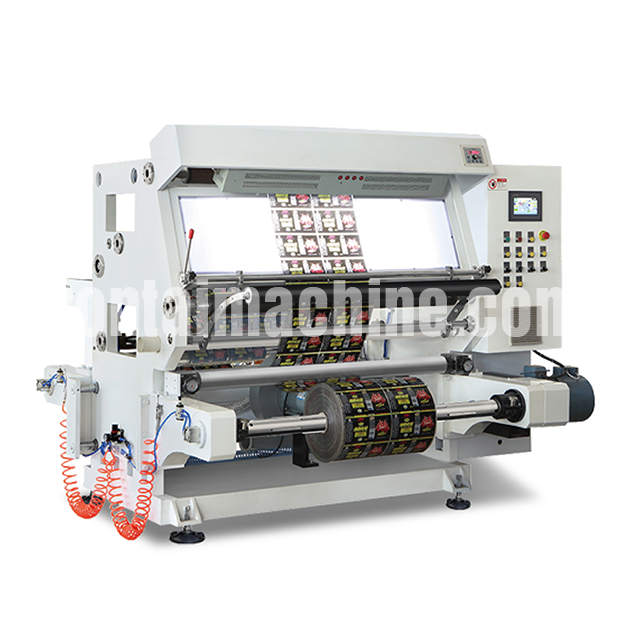
Different manufacturing sectors require specific machine configurations to handle unique substrate characteristics and defect parameters. You cannot use a standard paper rewinder to inspect highly stretchable polyethylene.
Temperature-sensitive and highly stretchable substrates like PE, BOPP, and PET require precise handling to prevent deformation. A dedicated film inspection rewinding machine manages these extensible materials using ultra-low tension control zones. Inspecting clear-on-clear materials or highly reflective metallic films presents unique optical challenges. Specialized coaxial lighting and advanced camera configurations eliminate glare and accurately identify defects on transparent or mirrored backgrounds. We use specific backlighting setups to catch pinholes in foil laminations that front lighting would miss entirely.
Narrow web inspection rewinders dominate the pharmaceutical, food, and beverage label sectors. Regulatory compliance in these industries demands zero missing labels and absolute data accuracy. Barcode and matrix readability must be perfect to pass automated retail scanning. These machines verify complete matrix removal and instantly flag any missing labels, ensuring only flawless rolls reach the packaging lines. If a pharmaceutical label is missing a single digit in the lot code, the entire batch gets rejected.
Wide web applications involve inspecting master rolls after post-printing, lamination, or coating processes. The system scans for structural flaws like delamination, trapped air bubbles, or coating voids. Identifying these issues before final slitting prevents defective materials from reaching the customer. It also provides immediate feedback to the lamination department to correct adhesive application issues. We often catch adhesive streaks on the rewinder that the lamination operator could not see at running speed.
Paper manufacturing, nonwovens, and industrial textiles utilize these machines extensively. Applications include inspecting medical meshes, filtration media, and automotive fabrics. The focus shifts from print quality to physical structural integrity. The cameras detect holes, splices, dark spots, caliper variations, and weave inconsistencies that could compromise the final product's performance. For medical nonwovens, detecting a tiny insect inclusion or oil spot is mandatory before the material goes to the cleanroom.
Procuring the right equipment requires balancing optical capabilities with mechanical web handling performance. You must match the machine specifications to your actual production environment.
Maximum web speed and minimum defect resolution share an inverse relationship. Faster speeds require significantly more processing power to maintain high resolution. Determine your necessary camera specifications based on the smallest critical defect size mandated by your quality standards. Detecting a 0.1mm defect requires different optics and lighting than finding a 0.5mm flaw. Balance this requirement against your daily throughput targets to avoid over-specifying the camera system. Buying a 4K camera system to find 2mm ink splatters wastes capital.
Frequent stop-and-start cycles during defect removal place immense stress on the web. Servo-driven motors and taper tension control prevent roll telescoping, starring, or material stretching during these aggressive transitions. Single-shaft rewinding suits simple inspection tasks with stable materials. Dual-shaft configurations provide better tension isolation and profile control, especially when post-inspection slitting occurs simultaneously. We always recommend dual-shaft systems if you plan to slit multiple narrow ribbons from a wide master roll.
Modern inspection systems must generate verifiable audit trails for every roll produced. The software logs the specific defect type, exact roll location, and total usable yield. Open API architecture is essential for modern plant connectivity. It allows seamless integration of inspection data with existing press-side defect maps and plant-wide ERP or MIS systems, facilitating comprehensive root-cause analysis. When a customer complains about a roll, you can pull the exact digital map and prove the roll left your facility defect-free.
Deploying automated inspection technology requires careful planning to avoid common operational pitfalls. You cannot just plug the machine in and expect perfect results on day one.
Overly sensitive optical systems cause excessive machine stops, which destroys overall throughput. Establish clear tolerance zones within the software during the initial setup. Utilize AI-assisted classification tools to differentiate between critical defects and acceptable material variations. The system must reliably distinguish between a harmless dust particle and a severe ink splatter that ruins the print. We spend the first week of any installation tuning the sensitivity parameters to match the specific substrate.
Operators might bypass inspection protocols if software interfaces are overly complex or splicing procedures are too slow. Prioritize intuitive, touchscreen-based HMIs that simplify job setup. Ensure the splicing table is ergonomic and easily accessible. Develop and enforce standardized operating procedures for defect removal and web re-splicing to maintain consistent cycle times across all shifts. If the splice takes five minutes, the operator will start ignoring minor defects to keep their production numbers up.
Underestimating the floor space required for wide-web machines causes severe operational bottlenecks. You must account for material handling equipment like overhead cranes or mobile roll lifters. Safe operator access zones are mandatory around the unwind and rewind stations. Conduct a thorough workflow layout analysis prior to procurement, factoring in raw roll staging areas and finished goods removal paths. We have seen installations fail because the forklift did not have enough turning radius to load the unwind shaft.
Automated inspection requires capital investment, but the returns manifest rapidly through waste reduction and efficiency gains. You are buying insurance against catastrophic quality failures.
Preventing defective material from reaching the slitting or packaging phases saves significant capital. Material value is highest at the end of the production cycle after inks, coatings, and labor have been applied. Catching errors early stops you from wasting resources on converting useless substrate, directly improving your bottom-line profitability. Every linear meter of bad material you ship costs you double: the cost to make it, and the cost to replace it.
Manual strobe-light inspection is highly unreliable and labor-intensive. Operators suffer from eye fatigue, leading to missed defects as the shift progresses. Contrast this ongoing labor cost against the fixed capital expenditure of an automated system. Automated machines free up skilled personnel for higher-value operational tasks, optimizing your workforce deployment. You can move your best inspectors to the printing presses where they can prevent defects from happening in the first place.
Eliminating customer rejections and chargebacks provides massive hidden ROI. Quality escapes threaten lucrative contracts and damage industry reputation. Consistent, verifiable quality delivery protects your brand reputation. Providing customers with flawless rolls backed by digital inspection reports secures long-term client retention and justifies premium market positioning. When you can guarantee 100% defect-free rolls, you can charge a premium over competitors who still rely on manual spot checks.
Implementing automated inspection transforms your quality control from a reactive bottleneck into a proactive, data-driven process. You protect your margins by catching defects before they reach the customer. To move forward with upgrading your facility, follow these steps:
Audit your current scrap rates and customer chargebacks to establish a baseline for ROI calculations.
Define your minimum critical defect size based on your strictest client's quality requirements.
Send sample rolls with known defects to equipment vendors for live material trials.
Evaluate the vendor's software interface for ease of use and ERP integration capabilities.
Map out the required floor space and material handling workflow before finalizing the machine footprint.
A: While both rewind material, an inspection rewinder is specifically engineered with stop-and-reverse capabilities and optical systems to find and remove defects. A standard slitter focuses purely on cutting and high-speed continuous rewinding without defect removal features.
A: Yes, it can handle both materials. The machine must be equipped with the correct combination of backlighting, coaxial lighting, and specialized camera sensors to manage reflection and transparency accurately.
A: Automated systems detect color variations, misregistration, missing labels, hickeys, streaks, and voids. They also identify insect inclusions and physical web damage like holes, splices, or edge tears.
A: The line-scan camera synchronizes with an encoder measuring web length. When a defect is spotted, the braking system calculates the exact deceleration required to present the defect perfectly at the splicing table.
A: The rewinder must stop to remove defects, which takes time. However, offloading inspection from the printing press allows the press to run at maximum speed continuously, ultimately increasing overall plant throughput.
A: The system compiles the data into a comprehensive roll report or defect map. This data can be exported as a PDF or XML file for quality audits, customer verification, and continuous process improvement.
