

Views: 0 Author: Site Editor Publish Time: 2026-06-08 Origin: Site


Maintaining a Slitting Rewinding Machine requires more than just preventing breakdowns. Operators must focus on preserving micro-level cutting accuracy and consistent web tension. When precision drifts, the consequences scale quickly across your production floor. Material waste multiplies rapidly. Rejected batches increase significantly. Premature mechanical wear actively degrades Overall Equipment Effectiveness (OEE). High-speed converting leaves zero margin for error. A neglected bearing or a dull blade directly harms your profit margins. This guide outlines a metric-driven maintenance framework to help you sustain ±0.1mm servo precision. We will show you how to protect core components effectively. You will learn how to transition from reactive repairs to a predictive asset management strategy. Keep reading to discover specific calibration protocols and standardized routines for peak machine accuracy. Every slitting system thrives on proactive care. Our guidelines ensure you maximize output without sacrificing quality.
Precision Relies on Tolerances: Guide roller diameter variance must remain below 0.1mm, and drive chains must be replaced upon reaching 1.5% elongation to prevent micro-vibrations.
Systematic Fluid & Air Control: Routine pneumatic moisture purging and strict gearbox lubrication schedules (initial 300-hour flush, 2,000-hour cycles) are non-negotiable for system stability.
Closed-Loop Calibration: Physical maintenance must pair with software alignment, requiring regular recalibration of Edge Position Control (EPC) sensors and tension load cells.
Matrix-Based SOPs: Implementing a tiered (daily/monthly/quarterly) maintenance matrix reduces unplanned downtime and accelerates changeovers via SMED (Single-Minute Exchange of Dies) principles.
Many facilities view maintenance as a sunk operational cost. You should frame it instead as a strict margin-protecting strategy. Modern production floors cannot afford unexpected halts. Every minute of downtime directly erodes profitability. Preventative maintenance keeps your machines running at optimal efficiency.
OEE & Scrap Reduction: Optimal tension control directly impacts your bottom line. Sharp blades and aligned rollers yield significant material savings. Facilities often see scrap rates drop from a 5% baseline to under 1.5%. Perfect tension prevents material stretching. Clean cuts prevent frayed edges. These improvements directly boost your Overall Equipment Effectiveness. You produce more sellable products using the exact same raw materials.
Protecting High-Value Subsystems: Operators often ignore early warning signs. A minor bearing vibration might seem harmless initially. However, these vibrations cascade through the machine framework. They eventually cause catastrophic gearbox failures. They can also destroy expensive servo motors. Replacing a fifty-dollar bearing today prevents a ten-thousand-dollar motor replacement tomorrow. Predictive tracking catches these anomalies early.
Equipment ROI Evaluation: Modern machines operate at intense speeds. A unit running at 500m/min requires exponentially stricter upkeep than legacy models. High speed amplifies minor defects. A slight roller imbalance at 100m/min barely registers. At 500m/min, it tears the web. You must maintain strict tolerances to secure your return on investment. Sticking to rigid schedules ensures high-speed equipment remains profitable.
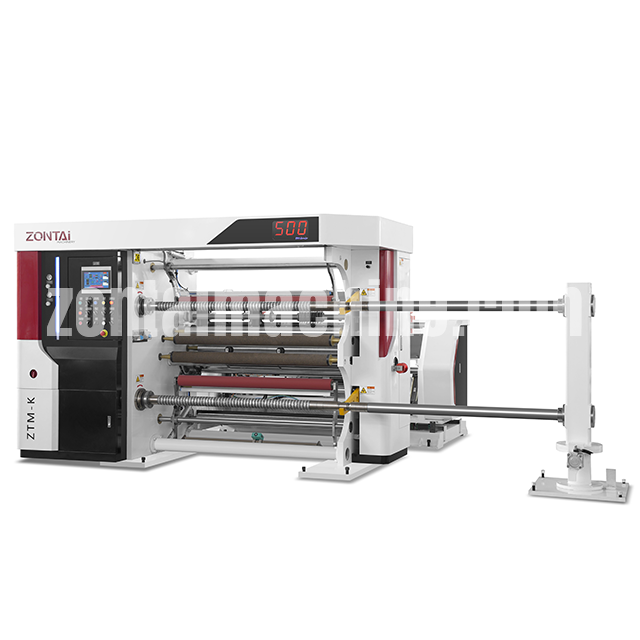
These components interact directly with your substrate. They ultimately dictate the final cut quality. Regular calibration ensures they perform flawlessly.
Blade degradation happens gradually. You must establish firm wear thresholds for different cutting methods. Operators need specific guidelines to avoid guessing.
Shear Cutting: Ideal for thick papers and foils. Monitor the overlap strictly. Excessive pressure dulls the bottom anvil quickly.
Razor Cutting: Used primarily for thin films. Inspect edges for microscopic chips. Replace them before they drag and warp the film.
Score/Crush Cutting: Common for pressure-sensitive adhesives. Check the pneumatic pressure. Worn score blades create excessive dust.
Always clean blades using non-abrasive industrial solvents. Harsh scraping tools create micro-pitting on the metal surface. Pitting attracts adhesive residue. This residue ruins the slit edge quality.
Rollers guide the web through the machine. Any surface defect transfers directly to the material. Mandate quarterly tactile and dial indicator tests. Have technicians physically feel the rollers for dead spots. Check for sticking bearings. Look closely for uneven surface wear.
You must maintain roller diameter tolerances strictly under 0.1mm. Uneven diameters cause web wandering. The material will pull toward the larger diameter side. This pulling fights the tension control system. It eventually causes wrinkling and rejected rolls.
Physical hardware needs accurate software instructions. Outline a clear process for dynamically recalibrating tension curves. You must adjust settings when switching substrates. Rigid PET films require entirely different tension profiles than extensible non-wovens. Applying film tension to non-wovens causes immediate snapping.
Routinely clean your Edge Position Control (EPC) sensors. Dust easily blocks photoelectric lenses. Ultrasonic sensors gather airborne debris. Dirty sensors feed false edge-tracking data to the controller. The machine then corrects a problem it merely imagined. This leads to uneven roll edges and telescoped products.
These systems provide the baseline stability of the machine. They synchronize moving parts. Neglecting them causes widespread mechanical chaos.
Proper lubrication defines the lifespan of your mechanical drives. Follow the industry-standard fluid lifecycle strictly. A new gearbox requires a mandatory initial system flush at 300 operating hours. This flush removes microscopic metal shavings from the manufacturing process. Afterward, initiate standard 2,000-hour replacement cycles.
Using incorrect oil viscosities invites disaster. Heavy oil in a fast gearbox causes overheating. Thin oil fails to protect the gears from grinding. Always consult the manufacturer specification sheet before adding fluids.
Synchronization depends entirely on belts and chains. Set strict baseline tension rules for maintenance teams. Maintain chain sag at roughly 2% of the sprocket center distance. Too tight causes bearing strain. Too loose causes jerky movements.
Implement a hard replacement rule. You must immediately replace chains exhibiting more than 1.5% elongation. Stretched chains create synchronization lag. The servos send commands, but the mechanical delay ruins the cut precision.
Air and power drive the entire slitting process. Keep them clean and stable.
Air Systems: Perform monthly moisture purging in pneumatic lines. Compressors generate condensation. Water inside pneumatic cylinders causes rapid corrosion. It also prevents expansion shafts from gripping cores securely.
Electrical Panels: Operational vibration affects wiring. Schedule quarterly retightening of PLC terminals. Loose electrical connections cause intermittent sensor drops. These phantom errors are notoriously difficult to diagnose.
Powertrain & Pneumatic Specification Table
System Component | Inspection Metric | Tolerance / Limit | Action Required |
|---|---|---|---|
Main Gearbox | Operating Hours | Initial 300 hrs / Then 2000 hrs | Complete fluid flush and replacement |
Drive Chains | Elongation Percentage | Maximum 1.5% stretch | Immediate chain replacement |
Chain Tension | Sag Ratio | ~2% of center distance | Adjust tensioner sprocket |
Pneumatic Lines | Moisture Accumulation | Zero visible water | Monthly manual or auto-purge |
PLC Terminals | Torque Tightness | Factory spec torque | Quarterly manual retightening |
Good intentions cannot replace structured routines. You must build verifiable Standard Operating Procedures (SOPs). This ensures maintenance is repeatable, measurable, and highly effective.
Safety is the foundation of effective maintenance. Mandate strict Lockout/Tagout (LOTO) procedures prior to any blade or shaft intervention. Technicians must secure all power sources. Accidental startups cause severe injuries.
Implement the "Four Controls" for your operating environment. You need strict waterproofing. You must ensure robust moisture control. Anti-corrosion measures protect bare metal surfaces. Rodent prevention is absolutely crucial for protecting delicate sensor wiring. A single chewed wire halts production for days.
Break your maintenance tasks into manageable timeframes. A matrix approach prevents overwhelming the technicians. It also integrates smoothly into daily production schedules.
Maintenance Tier Summary Chart
Frequency Tier | Focus Area | Key Activities |
|---|---|---|
Daily / Weekly | Surface & Sensors | Tactile roller checks, basic sensor wiping, dust extraction verification. |
Monthly | Fluids & Pneumatics | Pneumatic seal checks, basic lubrication points, tension curve audits. |
Semi-Annual / Annual | Geometry & Software | Deep geometric alignment (knife shaft parallelism), software audits, chain elongation tests. |
Using this framework reduces unplanned downtime. It also accelerates your changeovers. Applying SMED (Single-Minute Exchange of Dies) principles becomes easier when machines are perfectly maintained. Modular tool preparation happens faster when no parts are jammed or rusted.
Even perfectly maintained machines occasionally experience faults. Operators need a rapid-response decision framework. This section outlines how to diagnose and resolve common precision loss scenarios.
Uneven Slitting or Frayed Edges
Diagnosis: Dull blades usually cause this issue. Incorrect blade overlap is another common culprit. Sometimes, micro-vibrations in the shaft create ragged cuts.
Action: First, verify the blade penetration depth. Adjust it according to the material spec. Next, check the shaft bearings using a digital vibration meter. Finally, recalibrate the baseline tension to ensure the web stays taut against the knife.
Telescoping or Wrinkled Finished Rolls
Diagnosis: This points to a speed mismatch between servo zones. It can also indicate an EPC failure. Frequently, expansion shaft air leaks cause the core to slip.
Action: Conduct PLC speed micro-adjustments to sync the zones. Verify the air pressure in the differential slip shafts. Listen for hissing air. Validate your spreader roller alignment to ensure it flattens the web properly before winding.
Abnormal Machine Vibration
Diagnosis: Worn drive components create intense shaking. Sometimes, compromised structural rigidity is the root cause. The machine literally vibrates itself loose.
Action: Inspect the main foundation anchor bolts. Tighten them to the specified factory torque. Level the machine base using high-grade steel shims. Check all main motor bearings for excessive heat or grinding noises.
Strict, documentation-backed maintenance remains essential for sustaining high-speed precision. Ad hoc repairs fail to protect micro-level tolerances. You must establish routines covering mechanical calibration, fluid lifecycle management, and sensor hygiene. Every inspection extends the reliable lifespan of your equipment.
Production leaders should immediately audit their current maintenance logs. Compare your records against the specific tolerances discussed here. Are your technicians checking for 0.1mm roller wear? Are they measuring for 1.5% chain stretch? If not, update your SOPs today. Transition your team toward data-driven asset management.
Sometimes maintenance reaches its logical limit. If your legacy equipment continuously fails to hold tension despite rigorous upkeep, consider upgrading. An aging frame cannot match modern closed-loop control. It may be time to evaluate a fully multi-servo Slitting Rewinding Machine. Upgrading resolves chronic accuracy issues and dramatically boosts your daily output capacity.
A: Replacement schedules depend heavily on material abrasiveness and shift volume rather than rigid calendars. Cutting rough kraft paper dulls blades faster than soft polyethylene. Monitor cut quality constantly. Replace blades immediately once microscopic chips appear or edge fraying begins.
A: Fluctuations usually stem from core chuck slippage or load cell failure. Sometimes operators input incorrect recipe parameters for the specific substrate. Verify your pneumatic pressure first. Ensure chucks grip the core tightly. Then, clean and recalibrate the load cells.
A: Adopt SMED (Single-Minute Exchange of Dies) concepts. Pre-assemble blade cartridges offline while the machine runs. Standardize your tool storage next to the equipment. You can also utilize automated turret rewinding systems to eliminate stopping for roll discharges.
A: Lifespan depends entirely on pneumatic cleanliness and payload limits. Clean, moisture-free air extends friction ring life significantly. Routine moisture purging prevents internal rust. Avoid overloading shafts beyond their rated weight capacity to prevent premature mechanical bending.
