

Views: 0 Author: Site Editor Publish Time: 2026-08-14 Origin: Site


Processing ultra-thin aluminum foil requires absolute mechanical precision. During high-speed web converting, the microscopic fragility of the material becomes a primary operational constraint. Even minor edge deformities—such as micro-tears, burrs, stretching, or localized stress fractures—compound rapidly. These defects lead directly to catastrophic web breaks on the machine and severe material rejection in downstream processes, particularly in high-voltage capacitor manufacturing, battery electrode assembly, and medical-grade flexible packaging.
The hidden costs of poor edge quality drain facility profitability. High material scrap rates, unplanned machine downtime, and compromised barrier properties in the final product destroy production efficiency. Maintaining edge integrity across ultra-thin gauges down to 6 microns is exceptionally difficult. Managing tension across varying foil alloys and temper states, from fully annealed soft foil to hard-tempered foil, requires specialized mechanical intervention. A purpose-built aluminum foil slitter rewinder machine mitigates these risks through precise mechanical controls, advanced web handling, and optimized cutting methodologies designed specifically for non-ferrous metal foils.
Shear Slitting Superiority: Rotary shear slitting is the definitive industry standard for foil, producing clean, square, and burr-free edges that razor slitting cannot achieve without causing severe material deformation and microscopic edge tearing.
Tension Isolation is Mandatory: Multi-zone closed-loop servo tension control systems are required to isolate unwind, slitting, and rewind zones, preventing foil stretching and catastrophic web breaks.
Differential Winding Compensates for Gauge Variation: Utilizing differential rewind shafts with independent slip friction is critical to ensure uniform winding tightness across multiple slit rolls, compensating for inherent cross-web gauge variations in the master roll.
Aesthetic and Functional Integrity Coexist: Precise edge protection preserves both the functional barrier performance (preventing moisture and gas permeation) and the cosmetic appearance required for high-end consumer and pharmaceutical packaging.
Proactive Defect Mitigation: Implementing structured blade maintenance schedules and micro-vacuum dust extraction eliminates the primary causes of edge cracks, telescoping, and particulate contamination.
Defining a perfect slit edge in foil processing establishes the baseline for machine performance. A flawless edge features a perfectly square profile, zero burrs, no edge-stretching, zero microscopic cracking, and a complete absence of aluminum dust or shavings. Achieving this standard dictates the success or failure of subsequent manufacturing stages.
In capacitor and battery manufacturing, edge quality directly impacts safety and performance. Microscopic burrs on the foil edge act as concentration points for electrical stress. When wound into a tight cylindrical cell or stacked in a pouch cell, these burrs pierce the ultra-thin separator films. This causes dielectric breakdown, electrical shorts, or thermal runaway events. The tolerance for edge defects in lithium-ion battery current collectors is effectively zero.
Flexible packaging applications face different but equally severe consequences. Micro-tears and edge stress lines created during the slitting process propagate under the heat and pressure of sealing jaws. When a pouch is formed and sealed, these microscopic fractures expand, compromising the hermetic integrity of the packaging. This allows moisture and oxygen permeation, destroying the shelf life of sensitive food products and pharmaceutical compounds.
Standard paper slitters or robust plastic film slitters fail entirely when processing delicate aluminum foil. Foil possesses unique mechanical properties that general-purpose equipment cannot accommodate. It has an extremely low elongation threshold, meaning it will snap rather than stretch when subjected to excessive tension. It also has high thermal conductivity, which influences blade heat during high-speed cutting, and zero elasticity compared to polymer webs.
Feature | General-Purpose Slitter | Foil-Specific Slitter Rewinder |
|---|---|---|
Tension Control | Open-loop or basic load cells, high tension ranges | Multi-zone closed-loop servo, ultra-low tension capability |
Cutting Method | Razor blades or standard crush cut | Precision rotary shear slitting with zero-clearance setup |
Rewind Shafts | Solid air shafts | Differential friction shafts with independent slip rings |
Web Handling | Long unsupported web spans | Short web paths, specialized grooved idler rollers |
Dust Extraction | Optional or ambient | Integrated high-velocity micro-vacuum at the cut point |
Running foil on a machine designed for PET or paper results in stretched edges, heavy dusting, and frequent web breaks. The mechanical design must respect the absolute rigidity and fragility of the aluminum substrate.
Evaluating primary mechanical configurations is the first step in machine procurement. Modern high-speed industrial slitting systems differ fundamentally from legacy converter designs. The mechanics of the cut and the path the web takes dictate the final roll quality.
Razor slitting is entirely unsuitable for aluminum foil. Razor blades drag through the material. Because foil has no elasticity, this dragging action stretches, compresses, and tears the delicate edges. The result is an unacceptable scalloped edge filled with structural micro-cracks and heavy burring.
Rotary shear slitting is the mandatory standard. This method utilizes a top circular blade and a bottom female knife acting with precise side-pressure and overlap. It functions exactly like high-speed scissors. The physics of this shearing action deliver clean, square cuts that preserve the structural integrity of the foil edge. The top blade penetrates the foil just enough to pass the shear point of the bottom blade, snapping the aluminum cleanly without dragging.
The bottom knife shaft is driven at a slight overspeed relative to the web.
The top blade is pneumatically or mechanically engaged with precise side force against the bottom blade.
The web passes over the bottom knife, supported entirely at the cut point.
The shearing action fractures the foil cleanly, generating minimal dust and zero burrs.
The web path design heavily influences edge stability. Minimizing unsupported web spans—the free-web lengths between idler rollers—reduces the risk of edge flutter, wrinkles, and ambient air-draft disruption. When foil flutters before entering the slitting section, the cut wanders, destroying edge straightness.
Comparing horizontal configurations against a vertical film slitting machine setup reveals distinct operational differences. A vertical web path alters tension distribution and provides gravity-assisted dust collection, as particles naturally fall away from the web into extraction trays. Furthermore, vertical designs offer superior footprint efficiency and allow operators closer, safer access during critical blade alignment procedures.
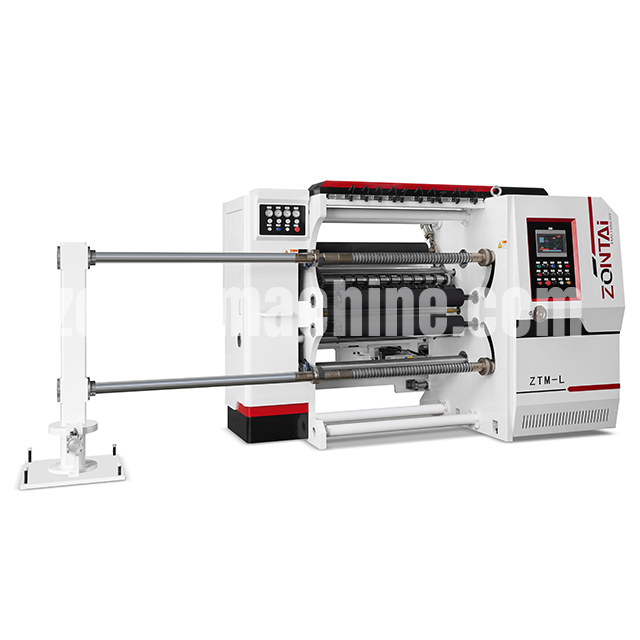
Mapping specific machine engineering components to the direct output of edge protection clarifies the necessity of high-end features. Every component in the web path must work to isolate tension and support the foil.
Dividing the machine into three isolated tension zones—unwind, slitting, and rewind—is an absolute necessity. You cannot pull foil through a machine using only the rewind motors. AC servo motors, paired with ultra-sensitive load cells and low-inertia dancer rollers, form a closed-loop system. These components automatically adjust torque and speed in milliseconds. This rapid response prevents foil breakage and edge stretching during the highly volatile acceleration and deceleration phases of the machine cycle.
Master rolls of aluminum foil always exhibit cross-web thickness tolerances. One side of the web may be a fraction of a micron thicker than the other. When slitting a wide master roll into multiple narrow ribbons, these gauge variations cause massive problems on standard solid rewind shafts. The thicker ribbons build up diameter faster, pulling tighter and eventually snapping. The thinner ribbons remain loose, causing the rolls to telescope.
A differential rewind shaft solves this physical reality. It applies independent, controlled slip to individual rewind cores via pneumatic friction rings. The shaft over-rotates, and the internal air pressure dictates how much torque is transferred to each specific core. This prevents tighter, thicker sections of the web from pulling too much tension and tearing, while ensuring thinner sections do not wind too loosely. It perfectly protects the slit rolls from telescoping or edge damage.
Specialized contact rollers, also known as lay-on rollers, apply controlled surface pressure directly to the rewinding rolls. As the foil winds, air is naturally pulled into the roll. This trapped air acts as a lubricant between layers, causing interleave friction, roll sag, and edge-shifting (telescoping).
The contact roller mechanism expels this trapped air. By applying precise, pneumatically controlled pressure, it forces the air out without compressing or deforming the delicate slit foil edges. The pressure must taper off as the roll diameter increases to prevent crushing the inner layers.
Even with perfect shear slitting, microscopic aluminum dust is generated. Integrating localized high-velocity vacuum extraction systems at the immediate slitting point is required. These custom-designed hoods sit millimeters from the blades, capturing aluminum dust, micro-shavings, and slivers before they can travel with the web. Preventing this particulate buildup ensures that stray aluminum does not dent or puncture adjacent foil layers during the rewinding process.
Operators must understand the mechanical root causes of common foil slitting defects to maintain production quality. Relying on guesswork leads to wasted material and damaged tooling.
Defect Type | Primary Mechanical Cause | Corrective Action / Machine Solution |
|---|---|---|
Edge Cracking / Micro-Fractures | Improper blade overlap, dull shear knives, incorrect cant angle. | Calibrate automated knife positioning; replace/sharpen bottom knives; verify side-pressure pneumatics. |
Telescoping (Edge Shifting) | Uneven winding tension, trapped air, failing differential slip rings. | Adjust PLC tension taper curves; increase contact roller pressure; rebuild friction rings. |
Dish-Shaped Rolls | Core slippage, excessive initial rewind tension. | Verify core chuck expansion; reduce starting tension in the rewind zone recipe. |
Web Wrinkling Before Cut | Misaligned idler rollers, uneven unwind tension. | Engage bowed/expander rollers; check web guide sensor alignment; tram all idler rollers. |
Heavy Aluminum Dusting | Excessive blade overlap, incorrect bottom knife overspeed. | Reduce blade overlap to minimum required for fracture; verify bottom knife drive motor speed. |
Wrinkling ruins edge alignment before the foil even reaches the knives. If a wrinkle passes through the shear blades, it creates a permanent crease and a jagged cut. The integration of specialized bowed rollers (expander rollers) and spiral-groove rollers is necessary to spread the web evenly and flatten it completely prior to slitting.
Capital expenditure for precision converting equipment demands long-term operational ROI. Evaluating the machine's versatility ensures it remains an asset as market demands shift.
Multi-material converters face complex operational requirements. A facility may need to process pure aluminum foil on one shift and a heavy laminate on the next. A high-end foil slitter rewinder machine can double as a versatile roll film slitting rewinding machine for complex composite structures like PET/Alu/PE or paper/Alu/LDPE laminates.
This dual-use capability is achieved by adjusting blade profiles, utilizing interchangeable slitting cartridges (swapping shear for razor if running pure polymers), and tuning tension parameters via preset digital recipes in the PLC. The heavy-duty frame and precise tension control required for foil make the machine exceptionally stable when running easier, more elastic materials.
Operators often push machines to maximize throughput, but there are strict physical limits to web speed when processing foil. Pushing a machine beyond its mechanical speed rating exponentially increases the risk of edge flutter. Furthermore, excessive speed generates high heat at the blade edge. When processing laminates, this heat can degrade the adhesives holding the layers together, causing delamination at the slit edge. Maintaining a balance between maximum line speed and perfect edge integrity requires strict adherence to the manufacturer's operational guidelines.
Deploying precision equipment on the production floor introduces practical challenges. The machine is only as good as the maintenance and operational protocols supporting it.
Precision edge protection is highly dependent on tooling wear. A dull blade will destroy foil edges regardless of how advanced the tension control system is. Facilities must establish strict maintenance schedules.
Log total linear meters run per blade set.
Remove and inspect bottom shear knives under magnification weekly.
Send dull knives to a certified grinding facility to maintain exact OEM angles.
Calibrate blade overlap, side-pressure, and cant angles using feeler gauges during every setup.
Running a differential slitter requires significant skill. There is a steep learning curve associated with setting up differential shafts, managing core locks, and tuning PLC-driven servo tension control systems. Operators must understand how to adjust taper tension curves based on material thickness and roll diameter. Comprehensive vendor training programs, including hands-on floor time and classroom theory, are essential to prevent costly operator errors.
The ambient environment heavily impacts foil handling. Ambient temperature fluctuations cause thermal expansion or contraction in the metal web. Low humidity increases static electricity, which causes dust to cling to the web and makes the slit ribbons repel each other, complicating the rewind process. Integrating active anti-static bars across the web path and operating within climate-controlled cleanroom environments are highly recommended for high-purity electrical and pharmaceutical foil conversions.
Protecting delicate foil edges is not achieved by a single feature, but through the synchronized, closed-loop integration of shear slitting, multi-zone servo tension control, and differential rewinding. Technical buyers must prioritize machines that offer closed-loop tension feedback, active contact roller controls, and robust, easily calibrated shear slitting modules over raw speed metrics.
Conduct rigorous material testing trials with your specific foil alloys and gauges on the vendor's test machinery before purchase.
Demand microscopic edge inspection reports from the trial runs to verify the absence of burrs and micro-cracks.
Request complete roll hardness profiles to ensure the differential shafts are functioning correctly across the entire web width.
Finalize procurement only after verifying the vendor provides comprehensive on-site operator training and preventative maintenance schedules.
A: Rotary shear slitting is the definitive method for foil. It utilizes a top and bottom circular blade acting like scissors to produce clean, burr-free, and square edges. Razor slitting fails because it drags through the inelastic foil, causing friction, heat, stretching, and severe micro-cracking along the edge.
A: It prevents breakage using multi-zone closed-loop servo tension control systems. By isolating the unwind, slitting, and rewind zones, and utilizing low-inertia dancer rollers and load cells, the machine maintains precise, ultra-low tension limits. This prevents the fragile foil from stretching or snapping during speed changes.
A: Differential rewind shafts compensate for inherent cross-web foil thickness variations. They use independent friction rings that slip at controlled rates, ensuring each individual slit roll receives custom winding tension. This prevents thicker sections from pulling too tight and snapping, and thinner sections from winding loosely and telescoping.
A: Yes, a high-end machine can function as a versatile roll film slitting rewinding machine. By utilizing adjustable blade cartridges, interchangeable slitting methods, and digital tension recipes stored in the PLC, it can easily convert complex hybrid packaging materials and polymer films.
A: The primary causes are dull shear blades, incorrect blade overlap, or improper cant angles. When the tooling is compromised, it tears the foil rather than shearing it cleanly. Implementing automated knife positioning systems and strict blade sharpening schedules eliminates these mechanical defects.
A: Dust is controlled through the integration of localized high-velocity vacuum extraction hoods positioned millimeters from the cut point. Combined with specialized shear knife profiles designed to minimize material shedding, this system captures particulates before they can contaminate the rewinding rolls.
A: A vertical web path offers several distinct advantages. It provides a minimal factory footprint, allows for gravity-assisted dust collection as particles fall away from the web, and offers operators easier, safer access to the slitting section for precise blade setup and calibration.
