

Views: 0 Author: Site Editor Publish Time: 2026-09-23 Origin: Site


Walk onto any high-volume converting floor. Upstream extruders and printing presses are likely running flawlessly, pumping out massive master rolls. But what happens at the end of the line? If a bottleneck occurs during the final converting process, the efficiency of your entire operation plummets. I have seen it firsthand on numerous plant floors: choosing the wrong finishing equipment inevitably leads to excessive material waste, poor roll profiles, and severely crippled production capacity. Consequently, sizing the machine correctly is not merely a technical checkbox; it is a high-stakes financial decision.
At the core of this process sits the slitter rewinder. This specialized equipment dictates the final physical quality of the packaging material before it ships to the end-user or downstream packaging lines. This comprehensive guide breaks down the exact technical parameters—width, speed, roll diameter, and automation—required to properly size a machine for flexible packaging applications. By thoroughly understanding these metrics, plant managers and engineers can establish a clear, objective roadmap for their next major equipment investment.
Width Dictates Capability: Choosing web configurations (e.g., 1300mm vs. 1600mm) depends entirely on your master roll dimensions and downstream VFFS/HFFS specifications.
Speed vs. Tension: A 500 m/min running speed is useless without closed-loop tension control to prevent thin film stretching or wrinkling.
Roll Diameter Math: Matching unwind (e.g., 1000mm OD) and rewind (e.g., 600mm OD) capacities ensures structural stability and minimizes changeover downtime.
Automation is the Standard: Upgrading to servo-driven systems with differential friction shafts drastically reduces human error and material scrap.
Material Matters: Extensible films, foils, and multi-layer laminates demand specific slitting methods (razor or shear) and specialized web paths.
Before diving into complex electrical and mechanical specifications, we must establish a foundational understanding of the equipment's operational sequence. A standard, off-the-shelf approach fails miserably in modern converting facilities.
The operation divides into three primary mechanical stages. First, the unwind section securely holds the heavy master roll, feeding the web into the machine while establishing initial tension. Next, the slitting section processes the wide web, precisely cutting the material into narrower strips using calibrated industrial blades. Finally, the rewind section tightly spools these newly slit strips onto individual cores. A dedicated flexible packaging slitter is engineered specifically to harmonize these three stages. It ensures the delicate nature of thin, extensible substrates is preserved throughout the run.
Why does precise sizing matter so much here? Flexible packaging presents unique processing hurdles. Substrates like 12-micron polyethylene (PE) and biaxially oriented polypropylene (BOPP) are highly susceptible to stretching, tearing, and thermal distortion. Conversely, multi-layer laminates and aluminum foils introduce varying degrees of thickness and surface friction. If a machine is oversized for your materials, it wastes valuable energy and floor space. If it is undersized, it creates immediate production bottlenecks.
Moving beyond basic mechanics, the first major buying criterion you must address is the physical width of the web. This foundational dimension directly influences the machine's footprint, frame rigidity, and overall capital cost.
Web width requirements are dictated by the output of your upstream extruders and your supply chain matrix. Robust units designed for primary film manufacturers typically handle widths of 1300mm, 1600mm, or even up to 3000mm. Processing massive master rolls straight from the extrusion line requires heavy-duty steel frames to manage significant inertia. In contrast, narrow web machines handle widths under 1000mm. These compact designs are frequently utilized for label converting and smaller bespoke runs where rapid changeovers are the norm.
In today's dynamic market, converters rarely process a single SKU day in and day out. Order sizes fluctuate. Downstream packaging machines constantly demand different roll widths. Because of this variability, investing in a versatile film slitting machine is crucial. Modern systems allow operators to reposition knives efficiently, often accommodating minimum slitting widths down to 50mm. Advanced models feature fully automatic knife positioning systems, reducing a manual setup task that used to take 30 minutes down to mere seconds.
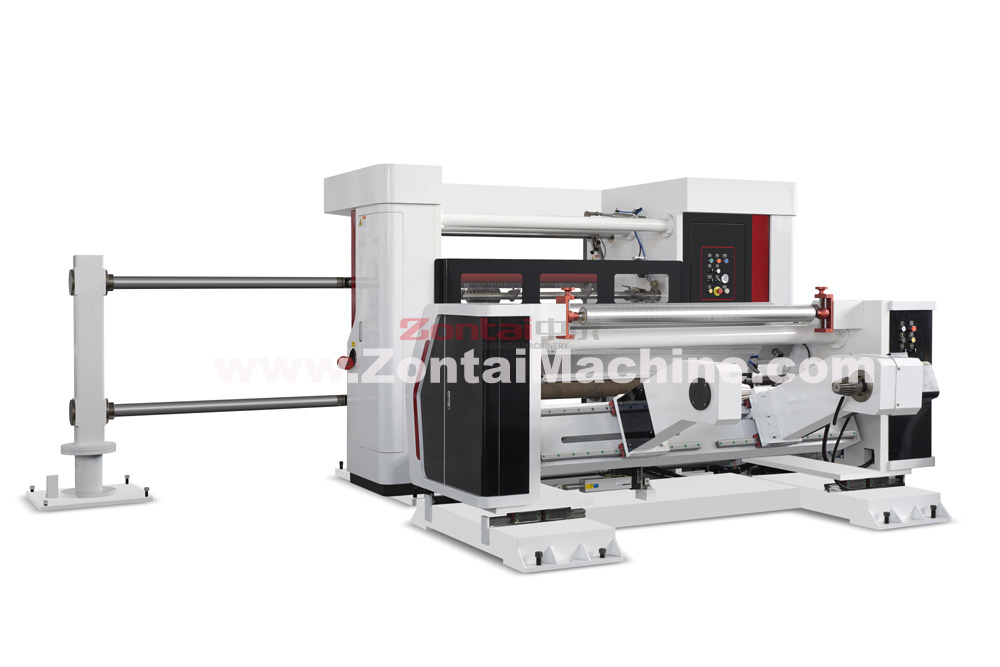
While web width defines physical capacity, machine speed is the primary driver of throughput. However, from an engineering perspective, speed cannot be evaluated in a vacuum; it is inextricably linked to tension control.
Standard converting speeds range from 300 m/min to 600 m/min, heavily dependent on the machine's mechanical design and the specific material running through the web path. While purchasing a high speed slitter rewinder looks great on a specification sheet, faster is not inherently better. Processing thin, extensible films at 500 m/min amplifies the physical stresses placed on the web. If the substrate's tensile strength cannot withstand the mechanical pull, the result will be web breaks, severe edge misalignment, or permanent material deformation. Therefore, maximum speed must always be sized according to the weakest material in your production matrix.
Tension control is the real secret to high-yield converting. It is the precise science of maintaining consistent longitudinal pull on the web. As the master roll decreases in diameter and the rewind rolls grow, the machine must dynamically adjust torque. A properly sized machine uses load cells and closed-loop PLC algorithms to independently manage three distinct zones: unwind tension, internal web tension, and rewind tension. Meticulous management here prevents catastrophic roll defects like telescoping or starring, where the core collapses under the pressure of tight outer layers.
Equally as important as speed and tension are the physical dimensions and weight capacities of the rolls themselves. Failing to size these parameters correctly leads to operational inefficiencies and serious workplace safety hazards.
To accurately size the unwind section, engineers must calculate the maximum outside diameter (OD) and total mass of the mother rolls. Industry standards for flexible packaging often require unwinds capable of handling 800mm to 1000mm OD. Picture an operator attempting to manually load a 1,000 kg master roll using traditional air shafts—it is both time-consuming and dangerous. For these applications, a shaftless unwind stand is mandatory. Utilizing pneumatic chucks that expand into the roll's core, these systems lift the roll hydraulically right off the floor, eliminating manual lifting.
Conversely, the rewind diameter is dictated by the limitations of downstream equipment, typically maxing out around 600mm for flexible films. When designing the rewind section, duplex center winders are the standard. Specifically, equipping the machine with differential friction shafts is highly recommended. These specialized shafts compensate for minor thickness variations (gauge bands) across the web, ensuring every individual slit roll winds with uniform tightness.
The flexible packaging converting industry is currently undergoing a profound technological transformation. We are witnessing a massive push toward sustainability, driven by global environmental mandates. Packaging manufacturers are rapidly transitioning to ultra-thin, recyclable mono-material films. These modern substrates are notoriously difficult to process. Legacy mechanical machines simply lack the finesse required to slit them without tearing or stretching. Consequently, facilities are forced to prioritize data-driven, automated converting to stay competitive.
Older machines often rely on a single main AC motor connected to components via belts, pulleys, and magnetic powder clutches. This architecture is prone to mechanical wear and tension drift. Upgrading to a servo drive slitter rewinder changes the operational paradigm entirely. By utilizing independent servo motors for the unwind, nip rollers, and rewind shafts, the machine achieves hyper-accurate, closed-loop feedback. These motors communicate with the PLC in milliseconds, adjusting torque instantly. This results in flawless tension control and a drastic reduction in mechanical maintenance.
Furthermore, automation directly correlates with a rapid Return on Investment (ROI). When specifying an automated system, look for features that eliminate manual bottlenecks. Laser core alignment projects a precise line onto the rewind shafts, guiding operators instantly. Automated roll unloading utilizes integrated pushers to transfer finished rolls directly to packaging conveyors, completely removing heavy lifting from the operator's daily tasks.
A machine sized perfectly for heavy kraft paper will fail catastrophically when processing thin plastic films. The physical properties of your material matrix must dictate the internal configuration of your equipment.
Different substrates exhibit distinct behavioral characteristics under tension. BOPP and PET are relatively stable and rigid, capable of handling higher speeds but requiring razor-sharp cutting to prevent edge cracking. Polyethylene (PE) is highly extensible, demanding ultra-sensitive, low-tension control zones to prevent stretching. Meanwhile, aluminum foil and multi-layer laminates are prone to scratching, requiring specialized rubber-coated idler rollers and precise web guiding to maintain pristine surface integrity.
Material Type | Typical Thickness | Recommended Slitting Method | Tension Requirement |
|---|---|---|---|
BOPP / PET Films | 12 - 50 microns | Razor in Groove / Air | Medium-High (Precise) |
Polyethylene (PE) | 20 - 100 microns | Razor | Ultra-Low (Load Cell feedback) |
Aluminum Foil / Laminates | 7 - 40 microns | Shear (Circular Blades) | Medium (Friction Shafts required) |
Paper / Heavy Non-wovens | 50 - 200+ gsm | Shear / Score | High Torque |
The slitting mechanism must be tailored to the material's thickness and composition. Razor slitting is highly cost-effective and provides a clean cut for standard plastic films. Shear slitting utilizes a male and female circular blade setup (similar to scissors) and is the mandatory standard for thicker laminates, foils, and paper, providing a highly stable cut at maximum machine speeds.
Ultimately, sizing a slitter rewinder is not merely an engineering exercise; it is a strategic business decision. You must balance initial capital expenditure against long-term operational efficiency.
Before requesting a formal quotation, compile a comprehensive specification document. Detail your complete material matrix (minimum and maximum thicknesses in microns), dimensional limits for web width and roll diameters, target running speeds, and a defined budget for automation upgrades. Identifying the manual processes that currently cause the most downtime will help you justify the cost of automation features to your stakeholders.
The final step is selecting a reputable manufacturing partner. Do not settle for off-the-shelf equipment. Look for a supplier that engineers solutions based on your specific production data. By investing in a fully automatic slitting rewinding machine equipped with proven servo technology, you ensure your facility meets global packaging standards. We highly recommend exploring the advanced ZTM-K series and other high-performance models at Zontai Machine to find the exact configuration that guarantees a measurable return on investment from the very first day of operation.
A surface winder drives the finished roll via surface friction against a motorized drum, which is highly effective for heavy, large-diameter materials like paper or thick non-wovens. In contrast, a center winder applies torque directly to the rewind shaft (the core). For delicate flexible packaging films, center winding is vastly superior as it prevents the material's surface from being crushed, scratched, or thermally distorted during the rewinding process.
Pricing is highly variable and depends on empirical specifications rather than a flat rate. Factors heavily influencing cost include the maximum web width, the transition from mechanical clutches to full servo drives, and the level of automation integrated (such as auto-knife positioning or robotic unloading). Buyers should focus on the Total Cost of Ownership (TCO) and ROI, as advanced machines offset their higher initial capital cost through drastically reduced material waste and lower labor requirements over time.
Yes, provided the machine is engineered with versatility from the ground up. To handle both substrates effectively, the machine must be equipped with interchangeable slitting systems (shear blades for paper, razor blades for thin films) and feature an advanced closed-loop tension control system capable of operating at both high torque for heavy paper and ultra-low tension for extensible plastics.
Traditional motor drives rely on mechanical linkages, belts, and friction clutches, which inherently wear over time and cause tension inconsistencies. Servo drives offer independent, digital control over specific zones (unwind, nip, rewind). This architecture allows for instantaneous, precise adjustments in milliseconds, which is absolutely crucial for maintaining flawless tension on extensible flexible films and preventing costly roll defects.
Maintenance schedules depend entirely on your specific material matrix. Abrasive materials, such as heavy kraft paper, thermal transfer ribbons, or aluminum foil, will dull shear blades significantly faster than standard PE or BOPP films. Facilities should track blade wear empirically and establish a strict standard operating procedure for blade replacement to prevent edge dust, micro-cracking, and poor roll profiles.
For highly extensible films like Polyethylene (PE), tension must be kept exceptionally low, often between 0.2 to 0.5 PLI (pounds per linear inch). This requires highly sensitive load cells and differential friction shafts on the rewind to prevent the material from stretching and deforming during the run. Standard mechanical friction clutches simply cannot maintain this level of precision.
Manual knife setup for a multi-slit run can take an operator 20 to 30 minutes, leading to significant machine downtime. An automatic knife positioning system uses servo-driven guides to place razor or shear blades at exact coordinates in under two minutes. This drastically reduces changeover time, minimizes human measurement errors, and directly boosts Overall Equipment Effectiveness (OEE).
